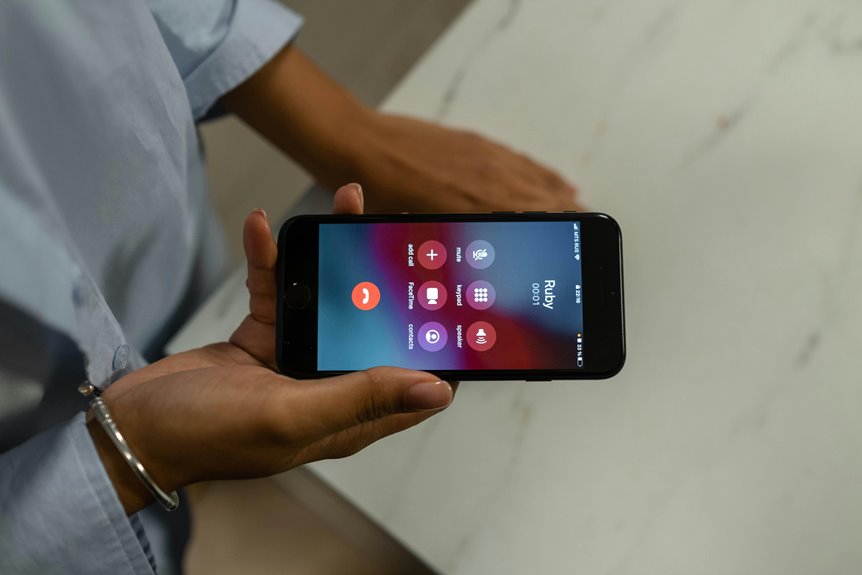
The discussion centers on the Contact Trace Intelligence Hub and its Trusted Caller Lookup. It evaluates how centralized verification, real-time risk scoring, and timestamped logs support authentic caller identification. The approach combines registry checks with anomaly detection to reduce fraud. While promising in speed and transparency, questions remain about privacy safeguards and operational metrics that must be addressed before full adoption. The stakes suggest careful scrutiny before broader deployment.
What Is the Contact Trace Intelligence Hub 941-216-5128?
The Contact Trace Intelligence Hub (CTIH), associated with the phone number 941-216-5128, functions as a centralized resource purporting to enable caller lookup and identity verification within a contact tracing framework. It presents a structured data model, documenting trusted caller interactions, verification steps, and contact trace outcomes. Analysts assess reliability, transparency, and governance to support freedom-driven public health decisions.
How the Trusted Caller Lookup Verifies Numbers
How does the trusted caller lookup verify numbers? The system employs multi-source cross-checks, matching caller IDs against authoritative registries and reputation data. It uses real-time number verification, pattern analysis, and risk scoring to confirm legitimacy. Data integrity is maintained via audits and timestamped logs, ensuring traceable provenance. The result supports a trusted caller designation, reducing false positives and enabling freedom in communication.
Detecting Scams and Flagging Suspicious Activity
Detecting scams and flagging suspicious activity builds on the prior verification framework by applying risk assessment to caller interactions. What is flagged is quantified by anomaly scores, cross-referenced with known scam patterns, and temporally linked to recent contact attempts.
How it works: continuous telemetry informs dashboards, enabling rapid triage and data-driven decisions without compromising user freedom or privacy.
Practical Tips to Maximize Accuracy and Speed in Daily Use
Aimed at improving both accuracy and response speed, practical tips emphasize lean workflows, standardized inputs, and real-time validation, backed by measurable metrics.
The analysis reviews What is contact and how trusted caller signals guide validation, aligning processes with transparent data provenance.
It favors modular tooling, objective thresholds, and continuous monitoring to sustain accuracy, speed, and user autonomy across daily usage scenarios.
Conclusion
The Contact Trace Intelligence Hub integrates centralized verification with real-time analysis to authenticate callers, ensuring data integrity and traceability. By cross-referencing authoritative registries and applying risk scoring, it detects anomalies and links activity to recent contact attempts. This approach yields measurable metrics and transparent provenance, supporting autonomous public health decisions while preserving privacy. In essence, the system operates like a precision instrument, revealing truth with the clarity of a laser-guided beacon.